Close tohome.Worth the wait.
A home baker with a strong starter, one oven and no name in the market. I named it, then built the brand, the voice and the website from nothing, around the one advantage a bakery chain can't copy: the baker lives down the street.
and site, from scratch
read in ten seconds
to Saturday pickup
plus three ad formats
“Your neighbor makes good bread.”
The brief
Carly bakes sourdough by hand in her home kitchen and sells it to the neighborhood. She came with the product and nothing else: no name, no identity, no copy, no site and no way to take orders. The brand is built and the site is ready ahead of launch.
The constraints were real. No storefront and no delivery. Supply capped by one home oven. No budget for a commerce platform before demand existed. The brand had to look as good as the bread, sell out a small weekly batch and make ordering feel as easy as texting a friend.
The thesis
At a home bakery, the baker is the proof. Neighbors trust a person they can meet before they trust a label, and a small batch reads as a reason to order early.
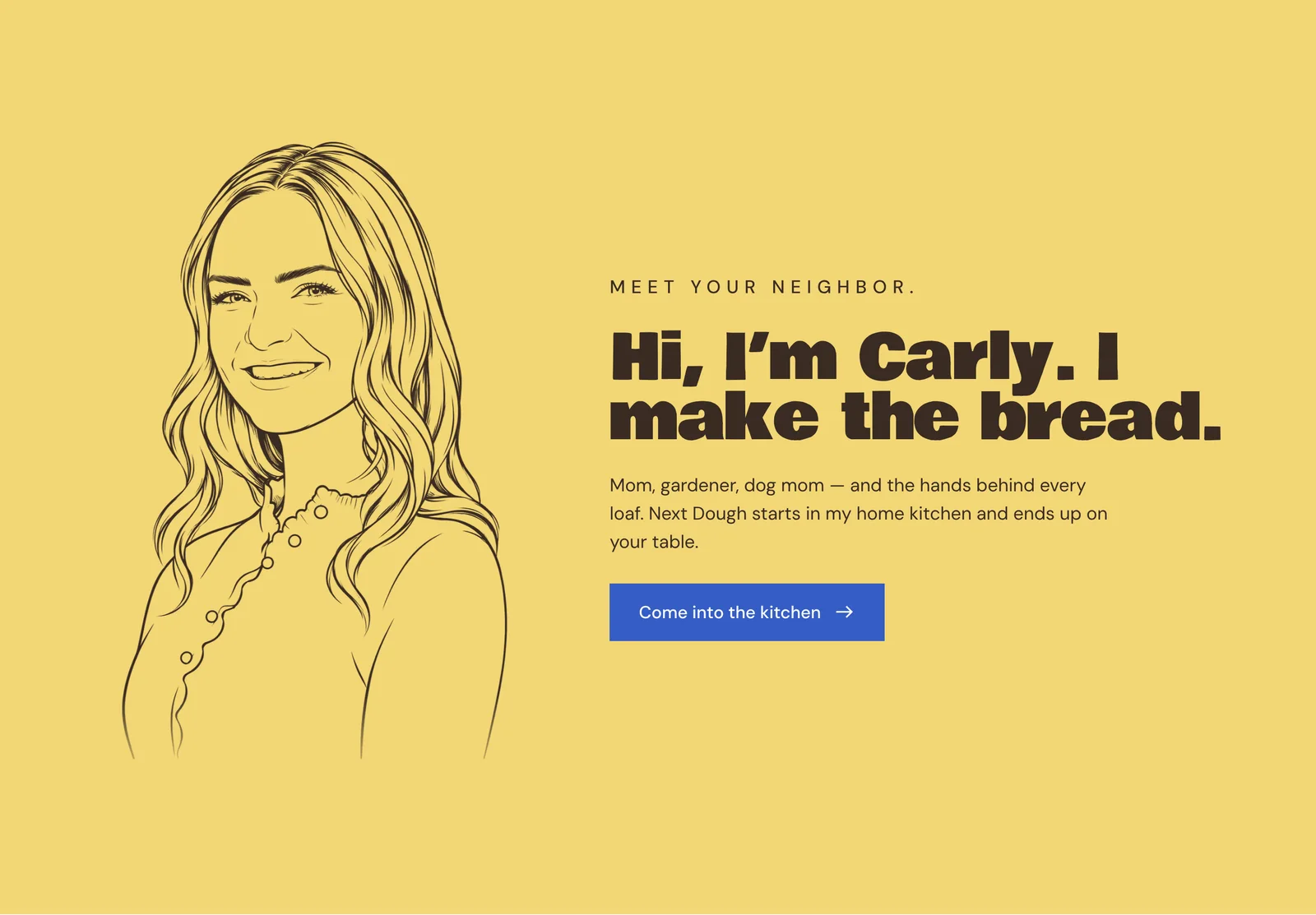
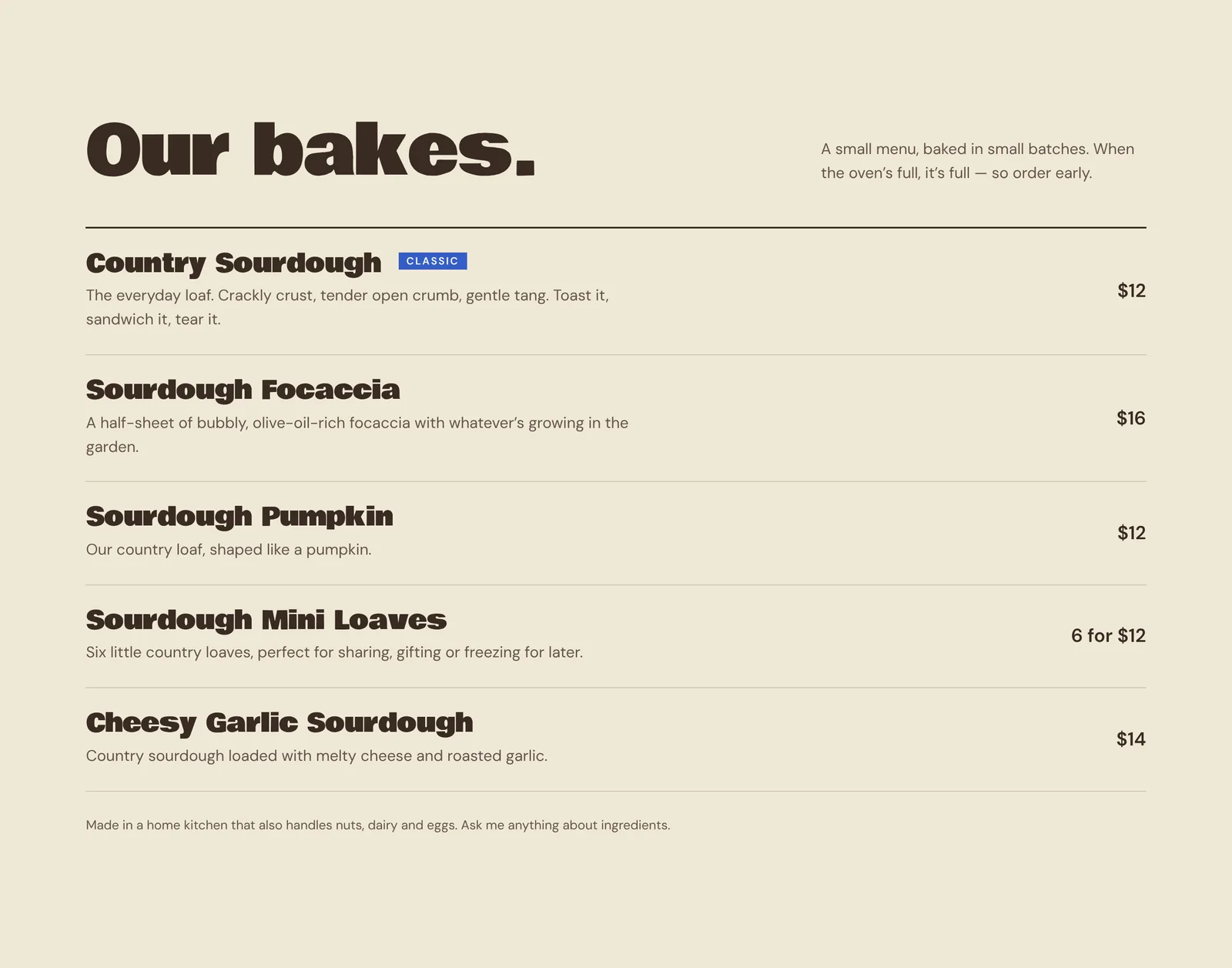
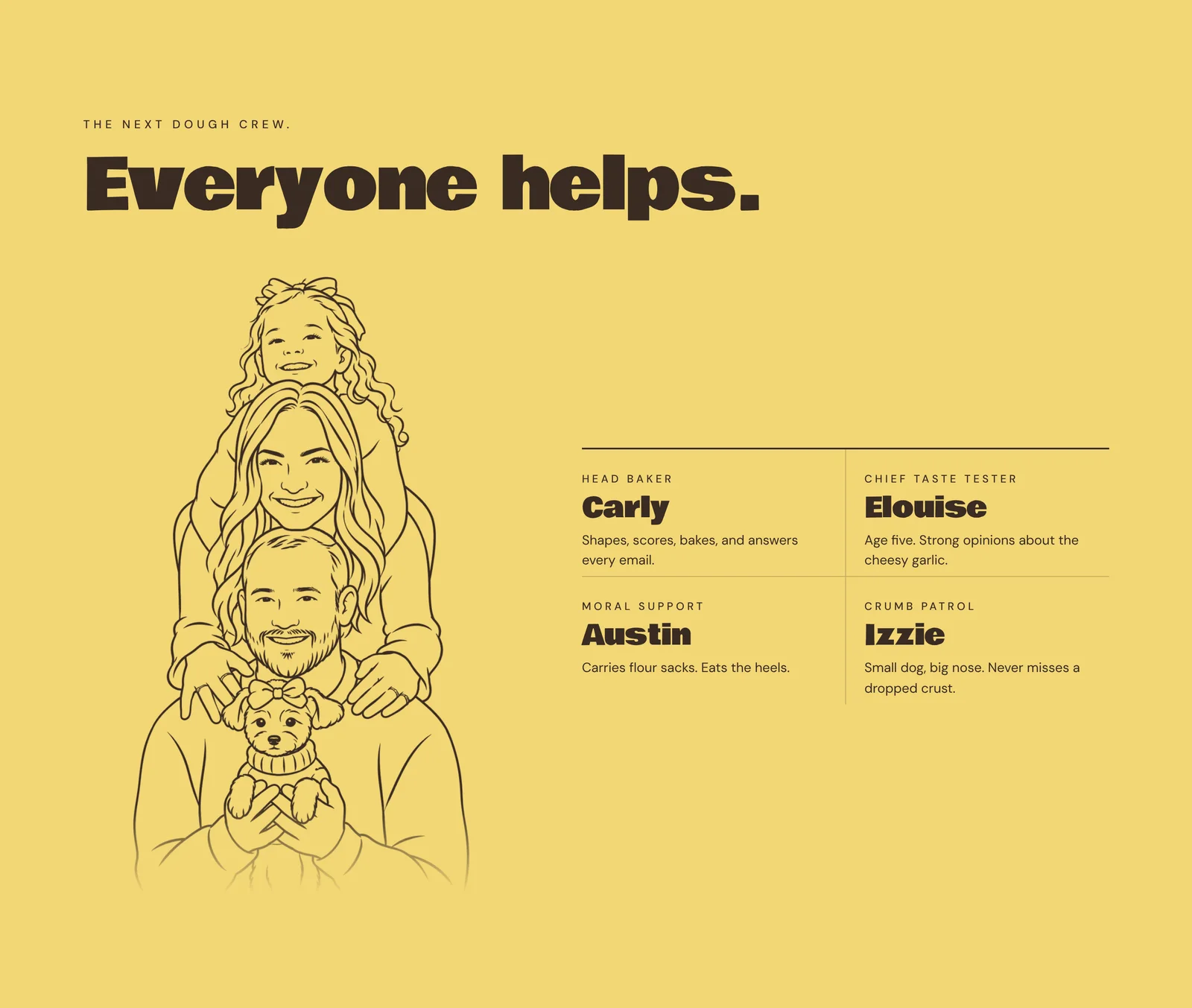
Every element does one of two jobs. Closeness: Carly's name on the page, her voice in first person, her line-drawn portrait, her family credited as the crew. Scarcity: a short menu, a Wednesday-night cutoff, a Saturday pickup window and a line that says it plainly, made slowly, gone quickly.
The work
next doorthat carries the whole positioning in two words, and a name that sounds like a habit: your next loaf.
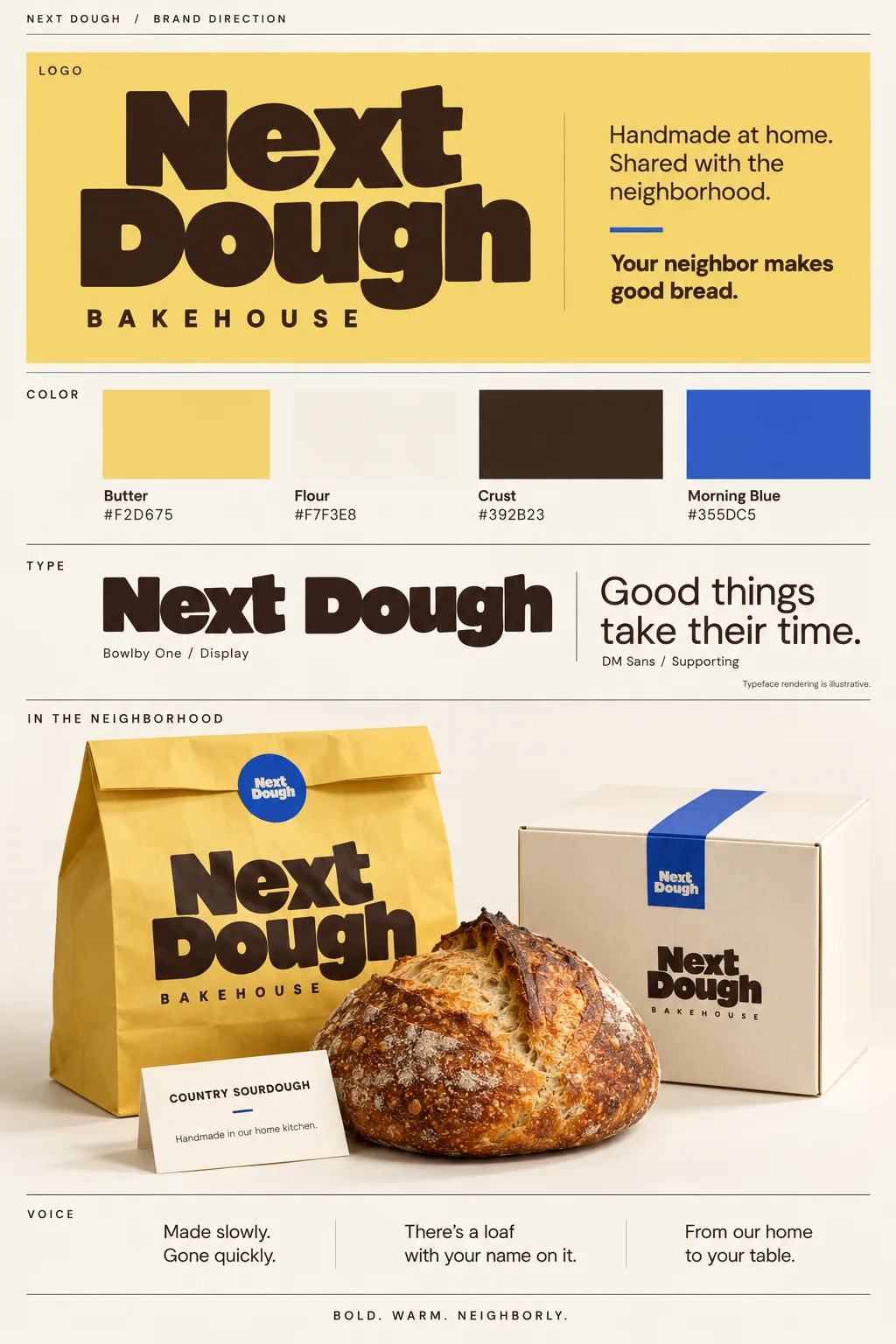
Bakehouselockup and a Flour version for dark grounds. Four colors with fixed jobs: Butter for warmth, Flour for breathing room, Crust for type, Morning Blue reserved for action. DM Sans carries the supporting type.
Our kitchenpage that introduces the family as the crew.
One page that holds the whole system: logo, color, type, packaging in the neighborhood and the voice in three lines.
The message system
Five lines, each with one job and a home across the site, packaging and social.
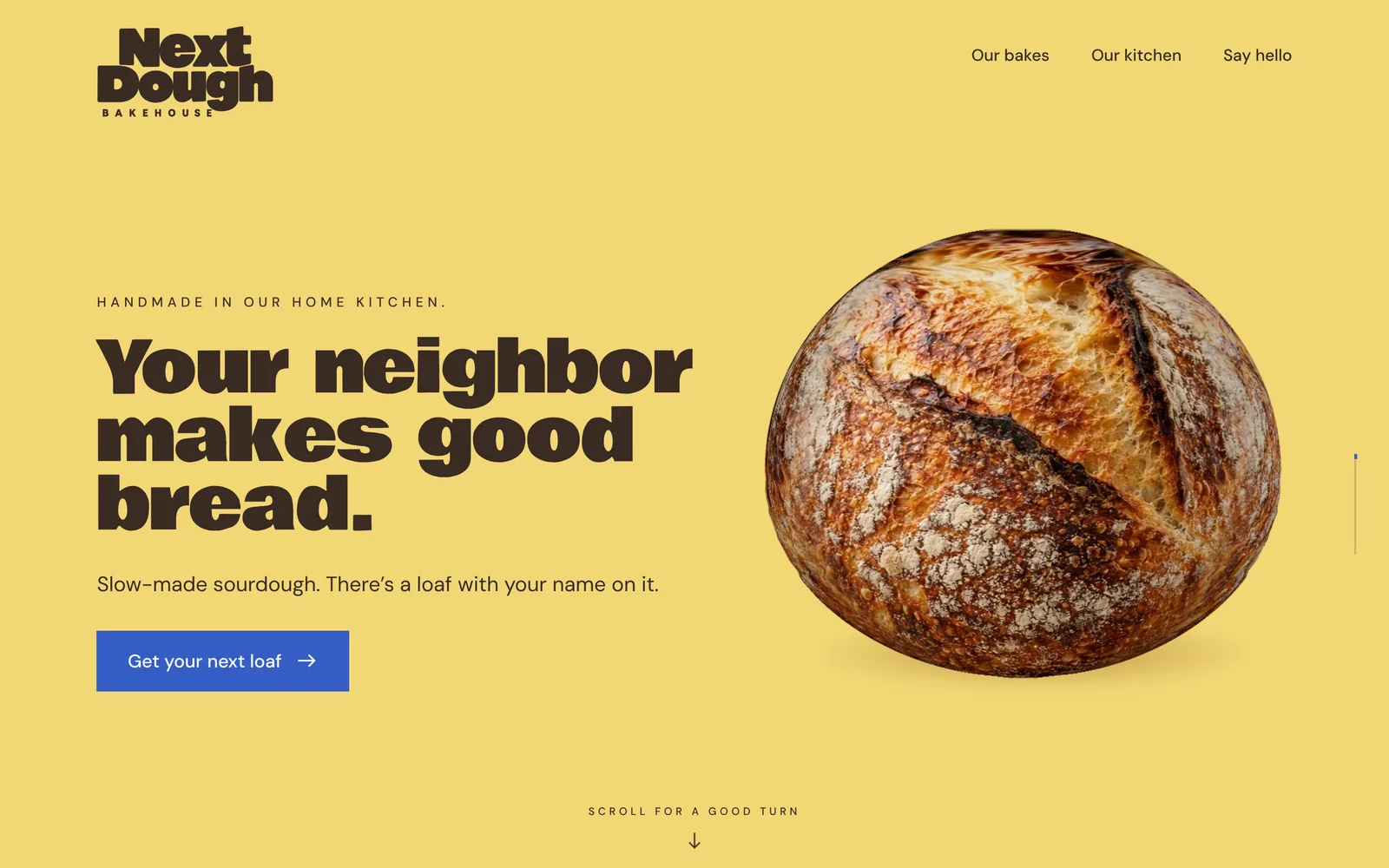
Your neighbor makes good bread.
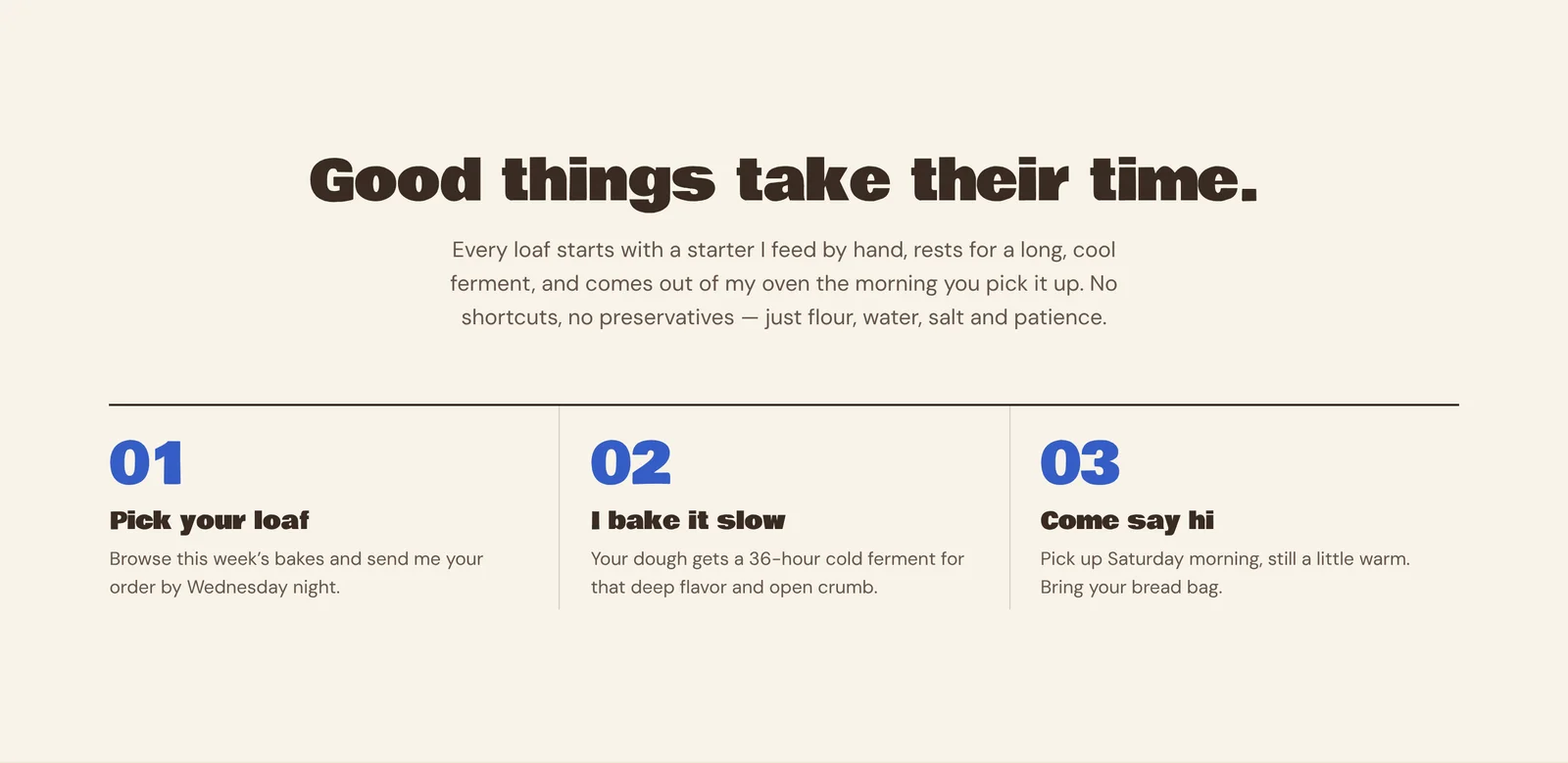
Good things take their time.
Made slowly. Gone quickly.
There's a loaf with your name on it.
From our home to your table.
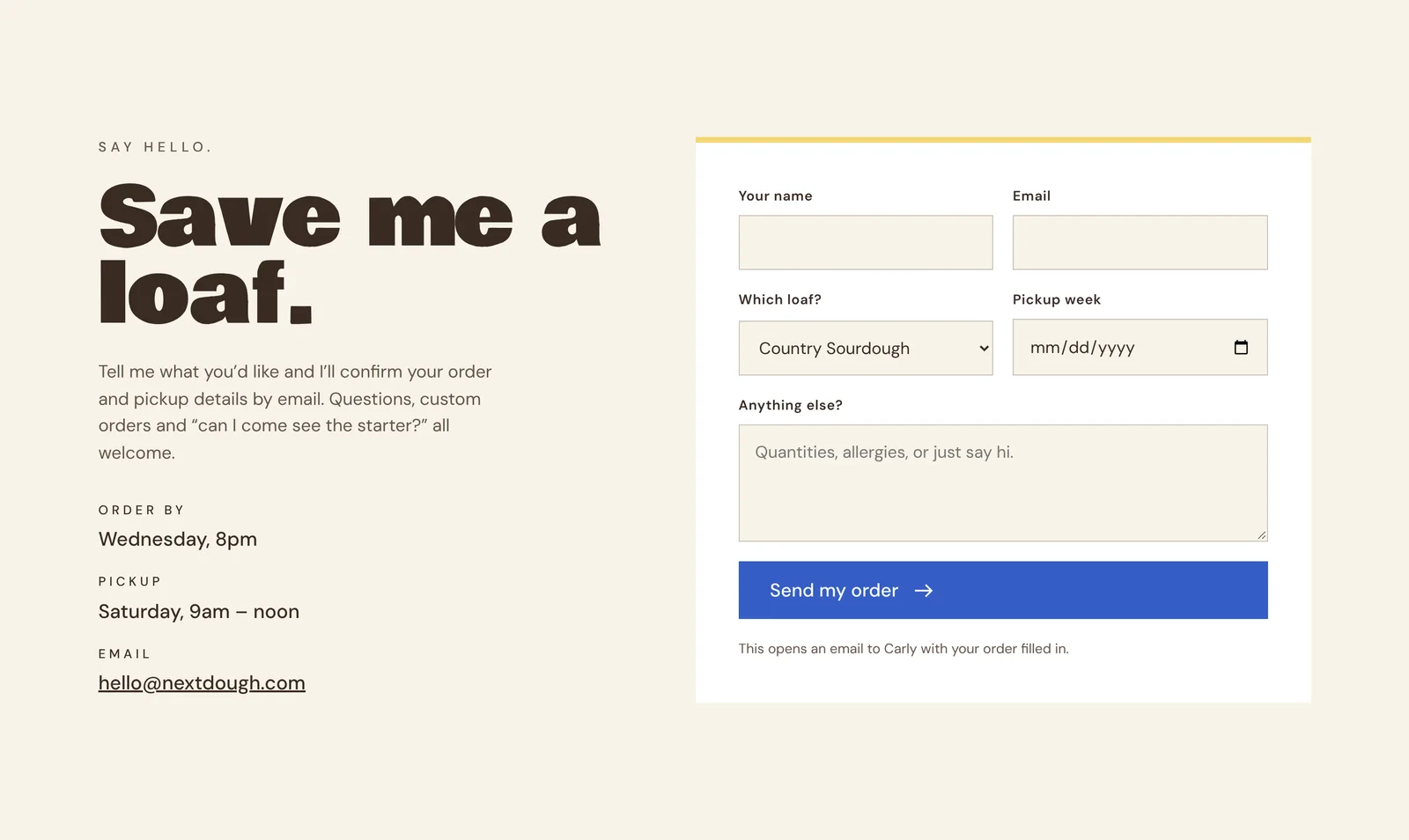
Built to answer three questions in order: what is this, what can I get, how do I get it.
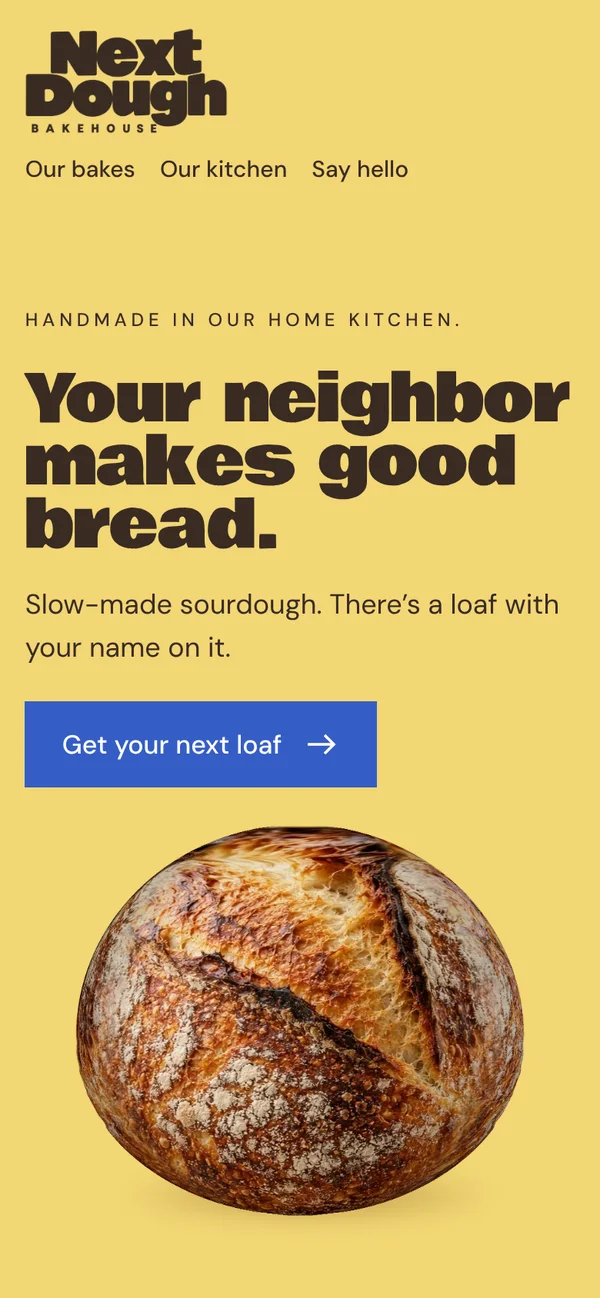
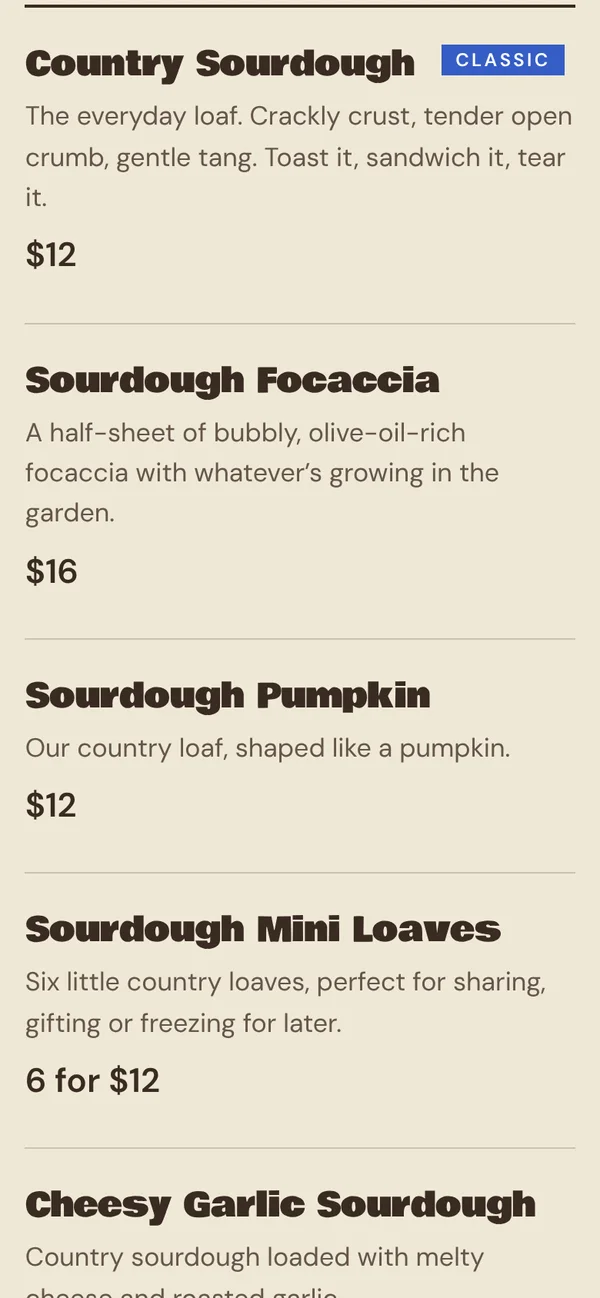
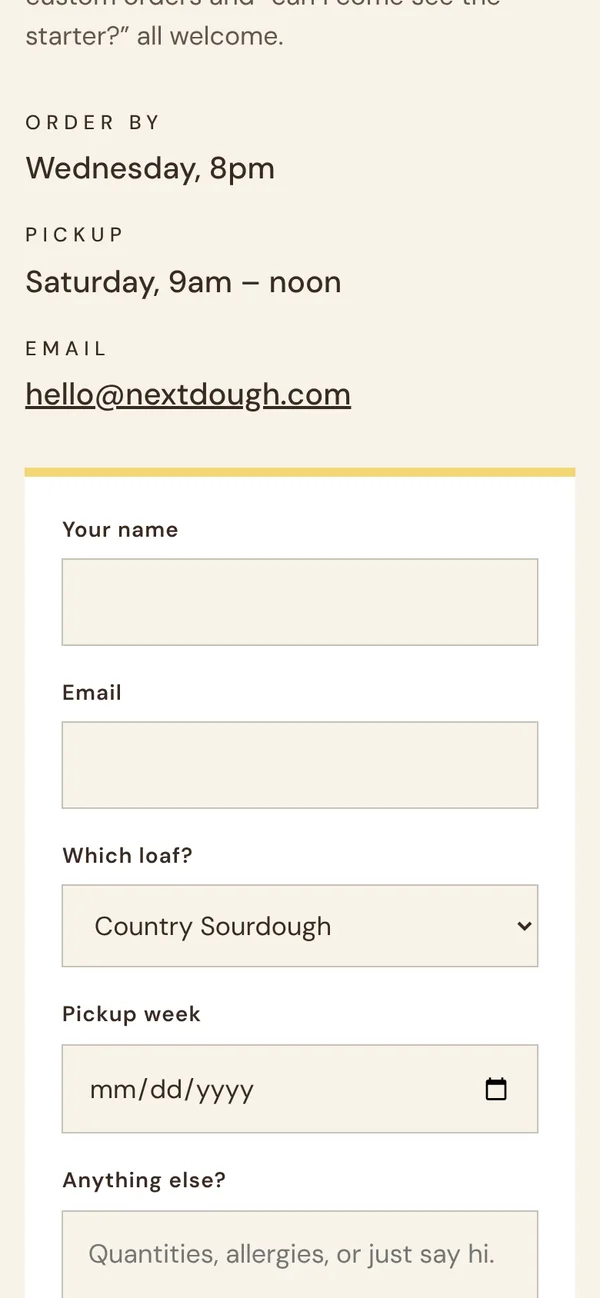
What this demonstrates
Brand architecture works at any size. The discipline I use on regulated, technical products held here: find the claim a buyer can verify, build every touchpoint around it and let operations carry the story.
It's also a full build by one person. Strategy, identity, copy, site and launch content came out of the same thinking, so nothing had to be translated between teams.
Is Next Dough a real business?+
What did you create for Next Dough Bakehouse?+
Why does the order form open an email instead of a checkout?+
DisclosureAI was used in building the website and in creating the photography and social imagery.
The grid alternates product, process and voice, so the feed tells the brand story from the first nine posts.